Dental Implants
Stabilizing Existing Dentures in Atlanta, GA
Keep the denture you have and make it fit securely with dental implants.
If you already have a denture but it no longer fits the way it used to, you may not need to start over from scratch. At Atlanta Dental Center, we can stabilize many existing dentures by anchoring them to a few dental implants. This restores a secure, comfortable fit, often without the cost and time of a brand-new appliance, so you can go back to eating and speaking with confidence using the denture you already own.

Your Complete Dental Destination
Serving the Atlanta Metro and Midtown Area since 1982
Tooth Replacement
Denture Stabilization at Atlanta Dental Center
Over time, the jawbone naturally shrinks beneath a removable denture, which is why a denture that once fit well can gradually become loose and uncomfortable. No amount of adhesive truly solves the problem, because the underlying support has changed.
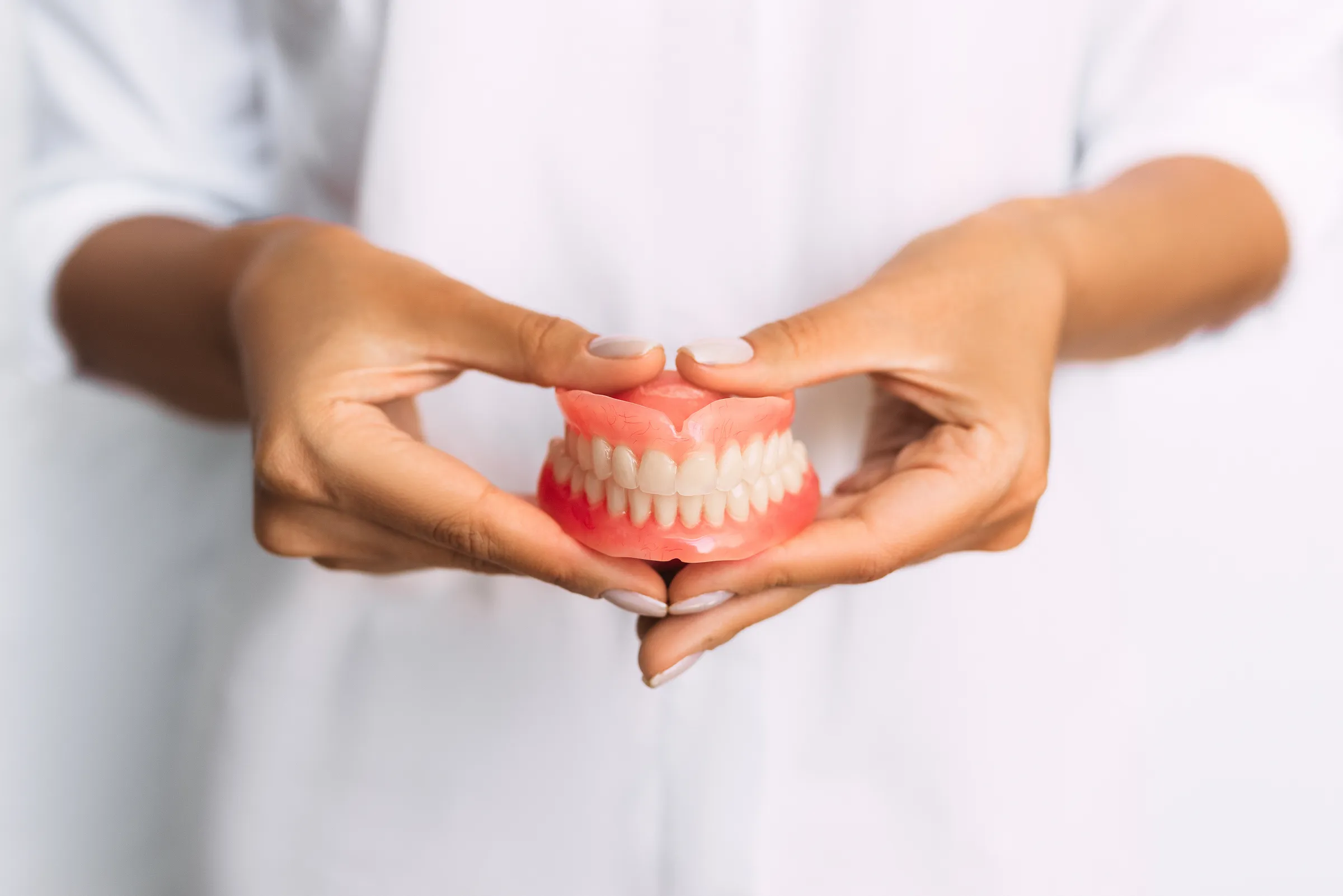
By placing a small number of implants and adding special attachments to your current denture, we can transform it into a stable, snap-in appliance. It clicks securely into place and stays there while you eat and talk, giving a worn-out denture a whole new lease on life, and giving you back the confidence that came with it.
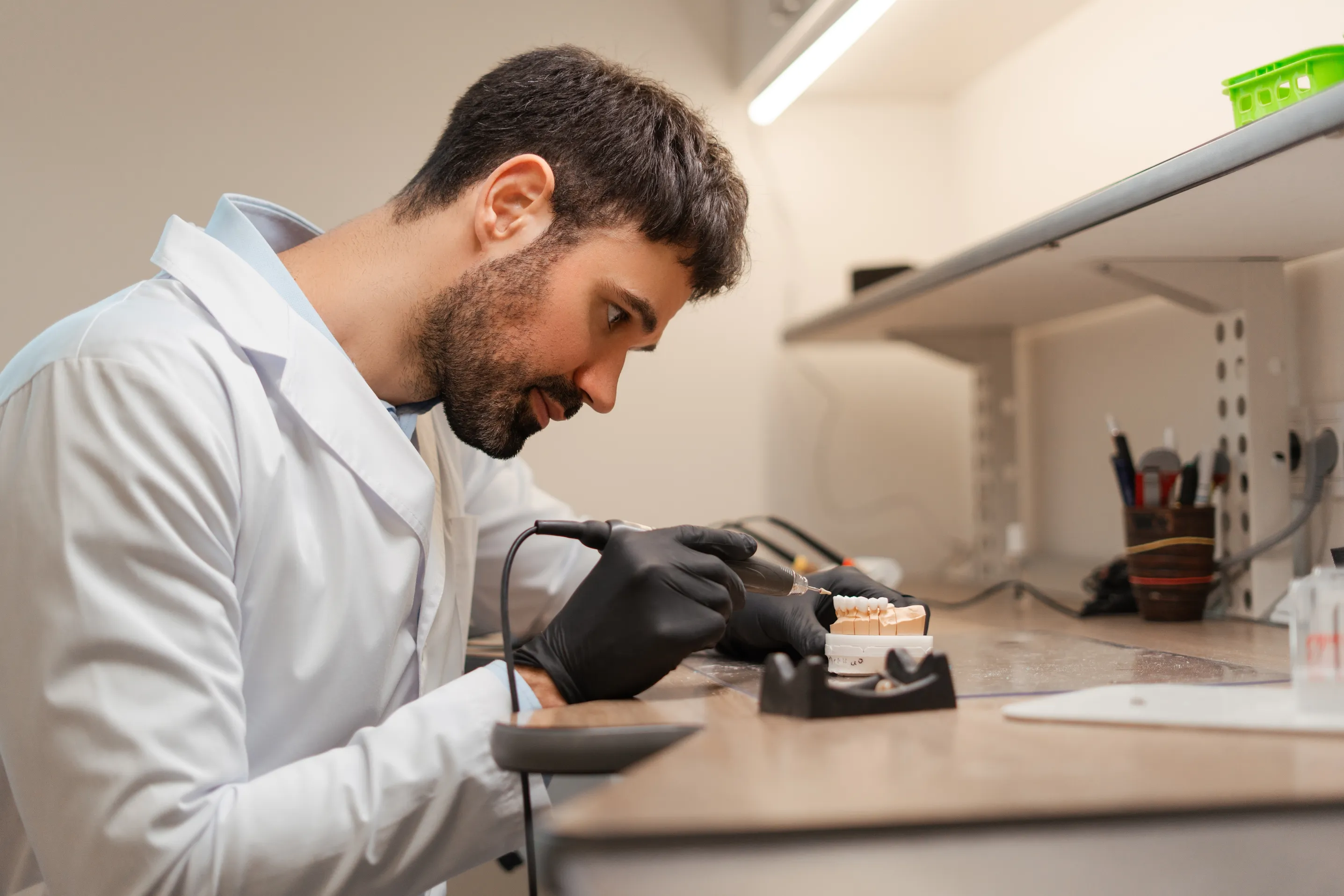
New Life for the Denture You Already Own
- Snaps securely onto implants, with no rocking
- Often more affordable than a full new restoration
- Noticeably improves chewing strength and comfort
- Helps slow the ongoing loss of jawbone
The Process
What It Involves
Stabilizing a denture is usually simpler and faster than starting over. We first confirm your denture is a good candidate, then add implant support in a few comfortable, well-spaced steps.
Evaluation
We examine your denture and take images to confirm it can be retrofitted.
Placement
A small number of implants are placed in the jaw to act as anchors.
Healing
The implants integrate with the bone over a few months.
Attachment
Attachments are added so your existing denture clicks securely into place.
Throughout the process you can keep wearing your denture, so you’re never left without a smile while your implants heal and integrate.
Is It Right for You?
Is Your Denture a Candidate?
Not every denture can be retrofitted, but many that are in good condition can. We’ll examine the fit and construction of your denture along with the health of your jaw to be sure. Stabilization may be right for you if you have:
- A denture that slips or rocks when you eat or speak
- A relatively sound, well-made existing denture
- Adequate bone to support a few implants
- A desire to avoid the cost of a complete new restoration
If your denture is older or worn, we may recommend a fresh implant-supported denture instead, and we’ll always give you an honest assessment of which path makes the most sense for you.
Schedule Your Visit
Make Your Denture Fit Again
A loose denture doesn’t have to mean buying a new one. Bring in your current denture for an evaluation and our team will let you know whether implant stabilization can restore a secure, comfortable fit, then walk you through exactly what’s involved. Contact our office today to schedule your visit.
Stabilizing Existing Dentures FAQ
- Can any existing denture be stabilized with implants?
- Many existing dentures can be retrofitted with snap-on attachments that connect to dental implants, but the denture must be in good structural condition with adequate thickness for the attachment housings. Atlanta Dental Center evaluates the denture’s design and condition during the consultation to determine whether retrofitting is viable or whether a new implant-supported prosthesis is recommended.
- How many implants are needed to stabilize a denture?
- Stabilizing a lower denture typically requires 2 to 4 implants, while an upper denture may require 4 to 6 implants due to the softer bone density of the upper jaw. The exact number is determined by the patient’s bone volume, which Atlanta Dental Center assesses using 3D CBCT imaging.
- Is retrofitting my current denture cheaper than getting a new one?
- In many cases, yes. Retrofitting an existing denture with implant attachments avoids the cost of fabricating a completely new prosthesis. The primary investment is in the implants themselves and the attachment components. Atlanta Dental Center provides a cost comparison between retrofitting and a new implant-supported denture during the treatment planning appointment.
- Will my stabilized denture still be removable?
- Yes. A stabilized overdenture snaps onto implant attachments using locator or ball abutments and can be removed daily by the patient for cleaning. This removable design allows thorough cleaning of both the denture and the implant attachments.
- Does it hurt to place the stabilization implants?
- Implant placement is performed under local anesthesia with sedation options available. The procedure for 2 to 4 implants is relatively straightforward, and most patients report post-surgical soreness that is manageable with ibuprofen or acetaminophen for 3 to 5 days.
- How long does the stabilization process take?
- After implant placement, the implants typically require 3 to 4 months to integrate with the jawbone before the attachment components are placed and the denture is modified. Some implant systems allow the denture to be attached to the implants on the same day as placement with a healing protocol.
- Will eating be easier with a stabilized denture?
- Significantly. A conventional lower denture provides approximately 20-25% of natural chewing force, while an implant-stabilized denture restores 50-60% or more. Patients report being able to eat foods like apples, salads, and meats that were difficult or impossible with a loose-fitting traditional denture.
- How do I care for a stabilized denture?
- Remove the denture daily and brush it with a denture-specific brush and cleanser. Clean the implant attachments and surrounding gum tissue with a soft toothbrush. Attend maintenance appointments at Atlanta Dental Center every 6 months for professional cleaning of the implants and inspection of the attachment components, which may need periodic replacement.
Office Hours
Quick Links